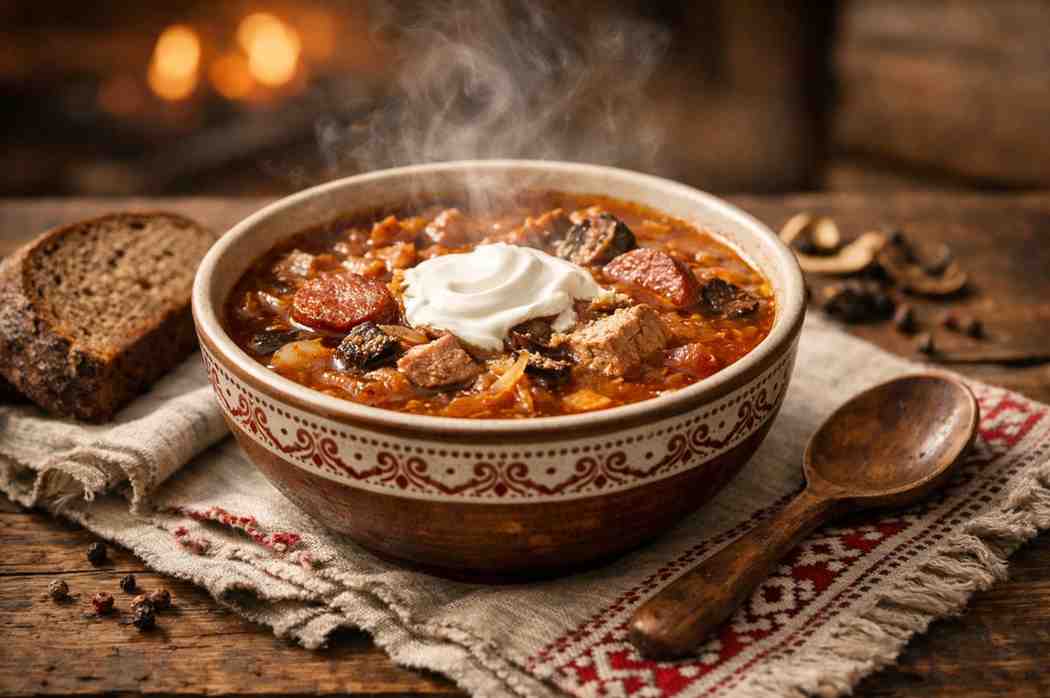
Kapustnica: A Soul-Warming Bowl of Slovak Tradition
Lisa Park • October 27, 2026
Some dishes are just food. Others are memory, ritual, and identity served in a bowl. Kapustnica, the traditional Slovak sauerkraut soup, belongs firmly in the second category. It is not just something people eat in Slovakia—it is something people wait for, especially during Christmas, and something that quietly carries generations of family tradition in its aroma.
I didn’t fully understand Kapustnica at first. On paper, it sounded simple: sauerkraut, meat, spices. But like many traditional dishes from Central and Eastern Europe, simplicity is only the surface. Beneath it is depth, patience, and a kind of culinary storytelling that modern recipes often forget.
What Exactly is Kapustnica?
Kapustnica is a hearty soup made primarily from sauerkraut (fermented cabbage). But calling it “just sauerkraut soup” feels unfair. It is built layer by layer, often including:
- Sauerkraut (sometimes both fresh and fermented varieties)
- Smoked meats (sausages, pork ribs, ham)
- Dried mushrooms
- Garlic and onions
- Paprika and caraway seeds
- Bay leaves
- Sometimes potatoes or tomatoes
- Occasionally prunes for a subtle sweetness
- A finishing touch of cream in some regional versions
The result is a soup that is tangy, smoky, slightly sweet, and deeply savory all at once.
Every household in Slovakia has its own version. Some are thick and stew-like. Others are more brothy and light. Some are meat-heavy, while others lean vegetarian during fasting periods.
A Dish Rooted in Tradition
Kapustnica is deeply tied to Slovak culture and especially to Christmas Eve dinners.
In many Slovak homes, the Christmas meal is not just about eating—it is a structured ritual. Families gather for multiple courses, and Kapustnica is often the first or second dish served. It represents warmth after fasting and sets the tone for the rest of the evening.
This tradition is particularly strong in rural areas, but it is also widely preserved in cities like Bratislava, where family recipes are still passed down and defended with pride.
The dish also reflects older preservation methods. Before refrigeration, fermentation (like sauerkraut) was essential for surviving harsh winters. Kapustnica was a way to turn preserved ingredients into something nourishing, festive, and celebratory.
The Flavor Profile: Why It Stays With You
Kapustnica is not a subtle soup. It has presence.
The first thing you notice is the sourness of the sauerkraut, which immediately wakes up your palate. Then comes the smokiness from cured meats, which adds depth and warmth. Garlic and paprika bring heat and aroma, while mushrooms add an earthy background note that makes everything feel grounded.
What makes it truly special is balance. Despite its strong individual components, nothing overwhelms the bowl. It feels layered rather than chaotic.
Each spoonful can taste slightly different depending on what you scoop—sometimes more sour, sometimes more smoky, sometimes rich with meat or softened with cabbage.
It’s a living dish, not a fixed one.
Regional and Family Variations
One of the most fascinating things about Kapustnica is how differently it is prepared from one household to another.
In some regions, it is almost a thick stew loaded with meats and sausages. In others, it is lighter and more acidic, with a stronger emphasis on sauerkraut and mushrooms.
Some families add dried plums for a faint sweetness that contrasts the sour cabbage. Others include cream to soften the acidity. Some even prepare meatless versions during religious fasting periods, relying entirely on mushrooms and spices for depth.
There is no single “correct” Kapustnica. Instead, there are hundreds of correct versions—each tied to memory rather than measurement.
Kapustnica and Winter Comfort
Kapustnica is at its best during cold weather. It is not a summer dish. It belongs to winter evenings, steaming bowls, and long conversations at the table.
There is something deeply comforting about how it is served. The smell alone—smoky, sour, garlicky—feels like it belongs in a wooden kitchen where something has been simmering for hours.
It is also a practical dish. The fermentation in sauerkraut provides probiotics, and the rich broth offers warmth and sustenance during cold months. Historically, it was both nourishment and necessity.
Today, it remains comfort food in its purest form.
The Experience of Eating Kapustnica
Eating Kapustnica is not rushed. It is meant to be eaten slowly, often with bread on the side.
The first spoonful usually surprises newcomers. The sourness can be intense if you are not used to fermented foods. But very quickly, the other flavors begin to appear—smoke, garlic, spice, and fat from the meat.
By the second or third spoonful, something shifts. The soup stops feeling unfamiliar and starts feeling comforting. By the end of the bowl, it often becomes addictive.
That transformation—from unfamiliar to comforting—is part of its charm.
Why Kapustnica Matters Beyond Food
Kapustnica is more than a recipe. It is a cultural marker.
It reflects:
- The importance of preservation in Central European cuisine
- The role of communal meals in family life
- The blending of religious tradition and seasonal cooking
- The value of slow cooking in a fast world
In a way, it represents patience itself. Nothing about Kapustnica is rushed. The cabbage is fermented over time. The broth is simmered slowly. The flavors are built gradually.
It is a reminder that some of the best things cannot be hurried.
Final Thoughts
Kapustnica is not trying to impress anyone with complexity or presentation. It doesn’t need to.
Instead, it offers something rarer: honesty. It tastes like winter, like tradition, like home cooking that has survived centuries without needing to change its soul.
Whether you encounter it in a Slovak home, a winter market, or a small restaurant, it carries the same quiet message: food can be simple, and still unforgettable.
And once you’ve had a good bowl of Kapustnica, you don’t just remember the taste—you remember the feeling of it.